

Businesses are seeking new ways to innovate and stay ahead of the competition, and technology plays an increasingly important role in this.
Choosing the right technology systems can be challenging, but cloud systems could be the perfect fit whether you have a professional service, logistics or manufacturing company.
We have created a guide to the benefits of cloud computing, including examples from our key product offerings: Dynamics 365 Finance, Dynamics 365 Supply Chain Management and Dynamics 365 Project Operations. Keep reading to find out more!
The term cloud computing was first coined in the 1960s and refers to a set of computer system resources that can be accessed remotely once installed. The ‘cloud’ simply means on-demand computer system resources, which the user does not manage or host.
Cloud computing is the practice of using remotely accessed servers to optimise current systems and processes within a business. Compared with other types of computing, cloud computing has many advantages, offering efficiency, scalability, and cost savings to organisations.
Cloud computing can be applied to various industries to support day-to-day tasks such as automation, process management, real-time performance tracking and data analytics. There are many different cloud-based systems available to choose from, each bringing its own benefits for businesses.
One of the most effective cloud systems for supporting business growth in 2024 is Enterprise Resource Planning (ERP) systems, including Microsoft Dynamics 365 systems.
Dynamics 365 is a portfolio of intelligent business applications that delivers superior operational efficiency and breakthrough customer experiences, enabling businesses to become more agile and reduce complexity without increasing costs.
ERP software is business process management built on cloud systems. The key aim of ERP software is to collate business data into a centralised system, increasing efficiency across different departments and automating various processes to free up time.
There are different types of ERP software; one of the most competitive is the Microsoft Dynamics 365 suite. The software has a huge amount of intelligent data analysis available and long-term insights about changes to the technology, ensuring users have time to update their existing systems.
We currently offer three cloud-based Microsoft Dynamics 365 products, including Dynamics 365 Finance, Dynamics 365 Supply Chain Management and Dynamics 365 Project Operations, with plans to expand our offerings in the near future.
Cloud-based ERP systems bring unique benefits to businesses due to the centralised aspect. Easier data access helps improve business operations, unlock key analysis and boost efficiency. Overall, cloud benefits help businesses increase their profitability by saving time on everyday tasks and remaining competitive, while performance insights allow businesses to refine their processes and offer a better customer experience.
ERP systems help to create a centralised data platform to easily access sales, customer, production, or financial data, allowing teams to adapt to important insights. The data trends that ERP systems uncover are crucial to help businesses measure the success of and continually improve their key business processes.
ERP systems also offer many automated features to speed up key processes, improving efficiency while saving time for employees. Automating repetitive tasks, such as data collection, purchase order creation or invoicing, removes human error, and day-to-day tasks can be undertaken much faster. The time saved allows companies to allocate resources more strategically, focusing on more profitable tasks and making the business more likely to run efficiently.
For example, Dynamics 365 Supply Chain Management offers live tracking of output on the factory floor to identify any machinery issues, which is perfect for manufacturing and production companies. Management teams can use these insights to solve machinery issues faster, compared to staff manually checking the factory floor each hour and preventing production or delivery delays.
One of the main differences between cloud software and other types of computing is that cloud software is hosted by a provider, not by the user itself. This means businesses using the cloud can cut expensive server costs, as the service provider hosts and manages the system.
Many cloud systems are designed on a pay-as-you-go system, where businesses only pay for the energy or data storage they use. For example, Microsoft Dynamics 365 systems are designed on a subscription basis, making it simple for businesses to scale their costs up or down depending on business needs.
Specific ERP systems can also support budget allocation and planning, helping to identify where businesses can save costs. For example, Dynamics 365 Finance has automated budgeting reports and analytics to help business owners make informed financial decisions and effectively reallocate budgets.
As cloud systems and ERP software are hosted on remote servers, businesses can decide how much software usage they need depending on their output and growth goals. Just like this element of cloud systems can help save costs, it allows businesses to develop their technology needs quickly.
Businesses thrive in flexible conditions, and cloud computing assists this by having the ability to quickly scale up and down on demand. This supports growing businesses by allowing them to react to fluctuations in data storage, add new ERP software or give access to new users without any major downtime.
Scalability is particularly important for growing businesses that want to test new cloud systems without a fixed contract. For example, a manufacturing business may test out the benefits of the easy-to-use sales dashboard from Dynamics 365 Project Operations and the automated cashflow forecast provided by Dynamics 365 Finance. After a period of time, the business can decide whether to keep both or just one of the systems, while having the flexibility to change their mind in the future.
Similar to how cloud systems can improve efficiency, the unique features of cloud ERP systems can help improve customer satisfaction. With a centralised customer information database, businesses can provide better sales and aftercare services and track the customer journey to prevent delays.
For example, Dynamics 365 Project Operations creates pipeline management for all open leads, which can highlight any delays in the customer journey. This would be particularly helpful with financial services companies, for example, helping legal firms spot any delays in gaining third-party information and highlighting that this needs to be followed up on.
With enhanced communication within key dashboards, for example, Microsoft Outlook and Teams integration, day-to-day customer interactions will be faster with ERP software, which helps to improve relationships and ensure that orders run smoothly. Any customer complaints or issues will also be able to be handled more efficiently, which removes the chance of the situation escalating.
One real-world example of cloud-based ERP for a logistics company is using the transportation management module through Dynamics 365 Supply Chain Management.
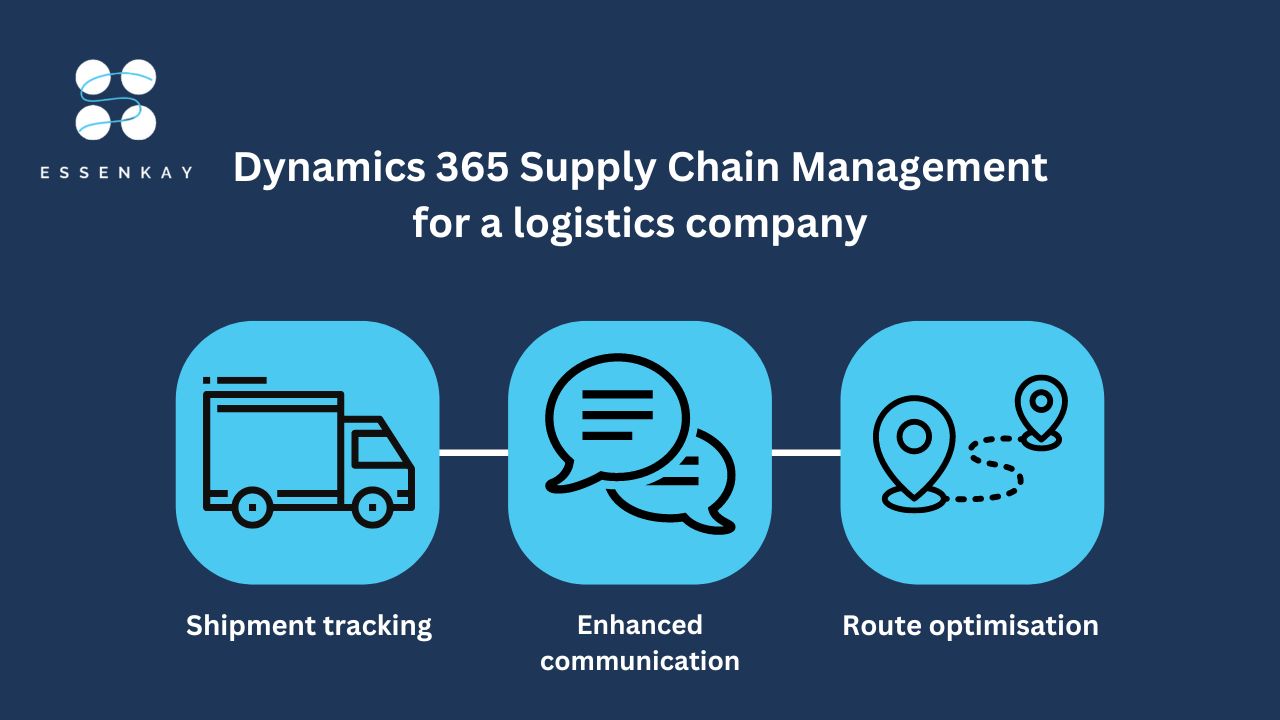
The specialised software provides real-time visibility into shipment tracking, route optimisation, and carrier performance. This allows decision-makers to easily spot potential issues in the delivery process and act accordingly to prevent delays.
In addition, the transportation module enables collaboration between shippers, carriers, and warehouse teams to help employees make informed decisions swiftly, minimising delivery times and improving overall customer satisfaction. This can be especially useful in times of extreme weather conditions, where the route-optimisation feature can offer an alternative route to avoid missed deliveries.
Overall, the logistics company would see an improvement in efficiency, which boosts profitability and increases employee satisfaction due to optimised processes that make day-to-day jobs run smoother.
To achieve successful cloud integration within a business, there are a number of best practice suggestions to follow.
One of the most important cloud computing practices is investing in training and skill development to ensure the success of cloud ERP software. Investing in training as soon as possible will streamline employee adaption and ensure any recurring issues can be addressed.
Another key best practice is data management and analytics. Now more than ever, companies need to find new ways to boost efficiency and streamline their processes, and cloud-based analytics helps businesses gain easy access to data across all departments. Using data insights, such as product issues, supply chain disruptions or customer complaint trends, helps to uncover more effective processes.
Compliance and governance remain important cloud-based best practices for all businesses. As new rules and regulations come into play each year across various sectors, it is important that technology meets regulatory requirements, such as data privacy. Working with a cloud technology partner will help businesses understand how to adapt to meet any new compliance requirements.
At Essenkay, we understand business owners may have concerns about investing in cloud-based software. There are a variety of reasons why business owners feel barriers when it comes to technological change, from internal anxieties to cost worries.
Below are the five most common reservations regarding digital transformation and how our services can support it.
Organisations without an in-house tech team may feel overwhelmed about implementing a new cloud system but are still aware of the positive outcomes it can bring.
Working with a Microsoft partner, such as Essenkay, allows businesses to access their specialised knowledge of Dynamics 365 cloud systems to create a custom technology solution. Businesses won’t need a large in-house IT team to support their cloud systems, as the Microsoft partner will manage and update the server.
In businesses that currently use outdated technology, employers feel reluctant to change out of fear this will make their processes less efficient.
Working with an expert in ERP implementation will help foster trust amongst employees and gain access to ongoing support to resolve any challenges. Through a mix of in-person and virtual training sessions, Essenkay can work to uncover the best ways of working with the organisation to allow each member to reap the benefit.
Like any business optimisation, switching to cloud computing results in upfront costs. There are also costs associated with sourcing expert support in implementing and updating the system.
While this financial investment can seem daunting, working with an ERP implementation expert will help identify the right system for the business. When the new system is up and running, companies will see long-term returns on investment, such as cost and time savings, eliminating the chance of the system being the wrong fit.
Cloud systems update their software regularly to ensure they offer the best possible features for end-users, but this can be a concern for businesses. Working with an ongoing support provider will ensure businesses gain access to specialised support to swiftly upgrade their systems and check for any additional training needs.
At Essenkay, we can set up regular touchpoints with businesses to upgrade and update cloud systems and ensure they are benefiting from the most up-to-date features to get the best value for money.
Businesses, particularly professional service companies, are often concerned about keeping their client’s data safe in a new system. A cloud host's full-time job is carefully monitoring security, especially with the Microsoft Dynamics 365 Suite.
For example, Microsoft cloud-based ERP has a range of data protection features, such as HTTPS encryption, protection from data interception and protection from data loss in transit.


